
Walking Upright: A Tale of Two Legs
Bipedalism
the ability to move about on two legs (like a human) instead of four legs (like a dog or a chimpanzee).Locomotion
movement; way of getting around.Lineage
a sequence of ancestor and descendant species through time.Hominin
humans and all of their extinct relatives. Some of the best known hominin genera include Australopithecus, Paranthropus, and our genus, Homo.Savanna
a mixture of grasslands and open woodlands; tree cover is usually less than 40 percent of the land cover.Adapted
changed to survive better in a specific environment.Orthograde
upright posture.Thermoregulation
the process that allows the body to maintain its core internal temperature.Stone tool
any tool made either partially or entirely out of stone.Bipedal locomotion
When you compare yourself to other animals, there are lots of differences that make you human. One difference that you might notice right away is how we walk. Humans walk on two legs, which we call bipedality. Our two-legged walking makes us unique. Other mammals, like your pet dog or cat, usually walk on all four legs, which we call quadrupedalism. Many animals are capable of standing or walking on two legs for a short time, and some birds are also bipeds. Besides humans, no other mammal (including all primates) regularly walks on two legs. How and why humans came to use two-legged walking is an interesting puzzle scientists are trying to solve.

Weird walking in Africa
The environment can sometimes give us clues as to why traits evolved. Our ancestors’ habitats are often reconstructed as African savannas. Savannas are grasslands with few, widespread bushes and trees. These open environments are also very sunny and dry.

Some scientists think that bipedalism is well-suited to the savanna environment. Balancing on two legs allowed our ancestors to see above the tall grasses when few trees were around to climb. Not only is this handy for detecting any predator coming toward you, but also for seeing animals you might hunt.
The orthograde, or upright body, posture is necessary for bipedal walking. It also improves thermoregulation, which is your ability to control your body temperature. When you’re too hot, for example, your body produces sweat to help you cool off. Sweating is rare among mammals. Dogs, for example, cool down by panting. Orthograde posture exposes less skin to the hot sun, aiding in thermoregulation.
Walking through the grassland (the climatic variability hypothesis)
Some scientists think bipedal locomotion evolved in woodlands. They believe that bipedalism allowed our ancestors to reach fruit high up in the trees.
The earth began to cool off about six million years ago. Global temperature was highly variable between four and six million years ago. Fast changes in the climate likely affected many plants and animals. Scientists think that these quick changes in climate caused our ancestors to become more flexible and resourceful. Bipedalism could have allowed our ancestors to be more flexible. Instead of only relying on the trees in wooded habitats, bipedal hominins could live in the forest and the grassland.
Our carrying capacity

Others think carrying stone tools and other inventions was a more important influence on the evolution of bipedalism. Stone tools are valuable. They are difficult to create and require special types of stone. Being able to easily carry both the stone and the tool would have benefited our early ancestors.
Our evolution of bipedal locomotion has been explained with many different hypotheses. Scientists have yet to discover a pelvis or limbs of the earliest hominins. Until these types of fossils are found, these hypotheses cannot be tested.
Bibliographic Details
- Article: Walking Upright: A Tale of Two Legs
- Author(s): Neysa Grider-Potter
- Publisher: Arizona State University
- Site name: ASU - Ask An Anthropologist
- Date published:
- Date modified:
- Date accessed: May 21, 2026
- Link: https://askanexpert.asu.edu/anthropology/stories/walking-upright-tale-two-legs
APA Style
Neysa Grider-Potter. ( ). Walking Upright: A Tale of Two Legs. Retrieved May 21, 2026, from https://askanexpert.asu.edu/anthropology/stories/walking-upright-tale-two-legs
American Psychological Association, 6th ed., 2nd printing, 2009.
For more info, see
the APA citation guide
.
Chicago Manual of Style
Neysa Grider-Potter. "Walking Upright: A Tale of Two Legs." ASU - Ask An Anthropologist . Published . Last modified . https://askanexpert.asu.edu/anthropology/stories/walking-upright-tale-two-legs.
Chicago Manual of Style, 17th ed., 2017.
For more info, see
the Chicago Manual citation guide
.
MLA Style
Neysa Grider-Potter. Walking Upright: A Tale of Two Legs. ASU - Ask An Anthropologist . , https://askanexpert.asu.edu/anthropology/stories/walking-upright-tale-two-legs. Accessed May 21, 2026.
Modern Language Association, 8th ed., 2016.
For more info, see
the MLA citation guide
.
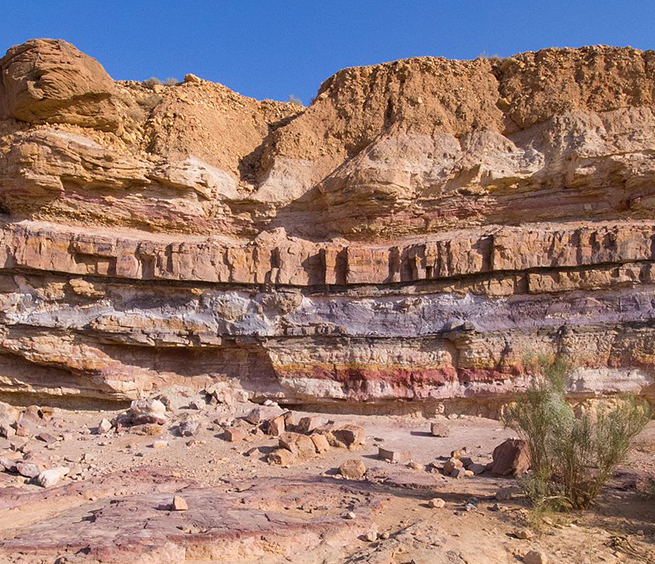
What can rocks and sediments tell us about how our ancient ancestors developed over the last 4 million years? Answer >>
Be Part of
Ask An Anthropologist
By volunteering, or simply sending us feedback on the site. Scientists, teachers, writers, illustrators, and translators are all important to the program. If you are interested in helping with the website we have a volunteers page to get the process started.


