

Ecology
the study of how organisms interact with one another and their environment.Reconstruction
using evidence to recreate something.Quadrupedalism
when an animal moves about on four legs (like a dog or chimpanzee).Comparative method
comparing data sets (animals, fossils, etc.) to explain patterns of similarity or difference.From fossils forward
Anthropologists can spend days, months, or years looking for an important fossil. But even if they find one, they've only completed the first step in learning about its history. Once it has been removed from the ground, the fossil is taken to a lab for analysis. Some analyses involve looking at the age and chemical make-up of the object. Other researchers might study the shape and size of it. Afterwards, they can then compare it to similar fossils or artifacts. For example, maybe you stumble upon the skeleton of what looks like a small monkey, and you compare its teeth to living monkeys to figure out what it ate. We call this the comparative method. Let’s look at teeth as an example.

Teeth can tell you many things (and not just whether someone needed to floss more). The shape and size of teeth can tell you about the types of foods an animal ate. In primates, we see different types of teeth depending on that primate’s diet. Primates, like other animals, eat foods that they have access to. Therefore, if we can figure out what extinct primates ate, we can learn about the environment they lived in.
Teeth are not the only telling features of the skeleton. We can look at how the individual moved by looking at parts of their arms, spine, pelvis, and legs.

The above image shows the skeletons of all living apes. What kinds of differences do you see between their skeletons? Many of these differences have to do with how these animals move. For example, the long arms of the gibbon and orangutan are used for hanging under large tree branches.
One of the unique things about being human is that we walk on two legs. After bipedalism evolved, our ancestors were able to travel farther, perhaps in search of food. Becoming bipedal also freed our ancestor’s hands so they could carry items such as food or stone tools with them.
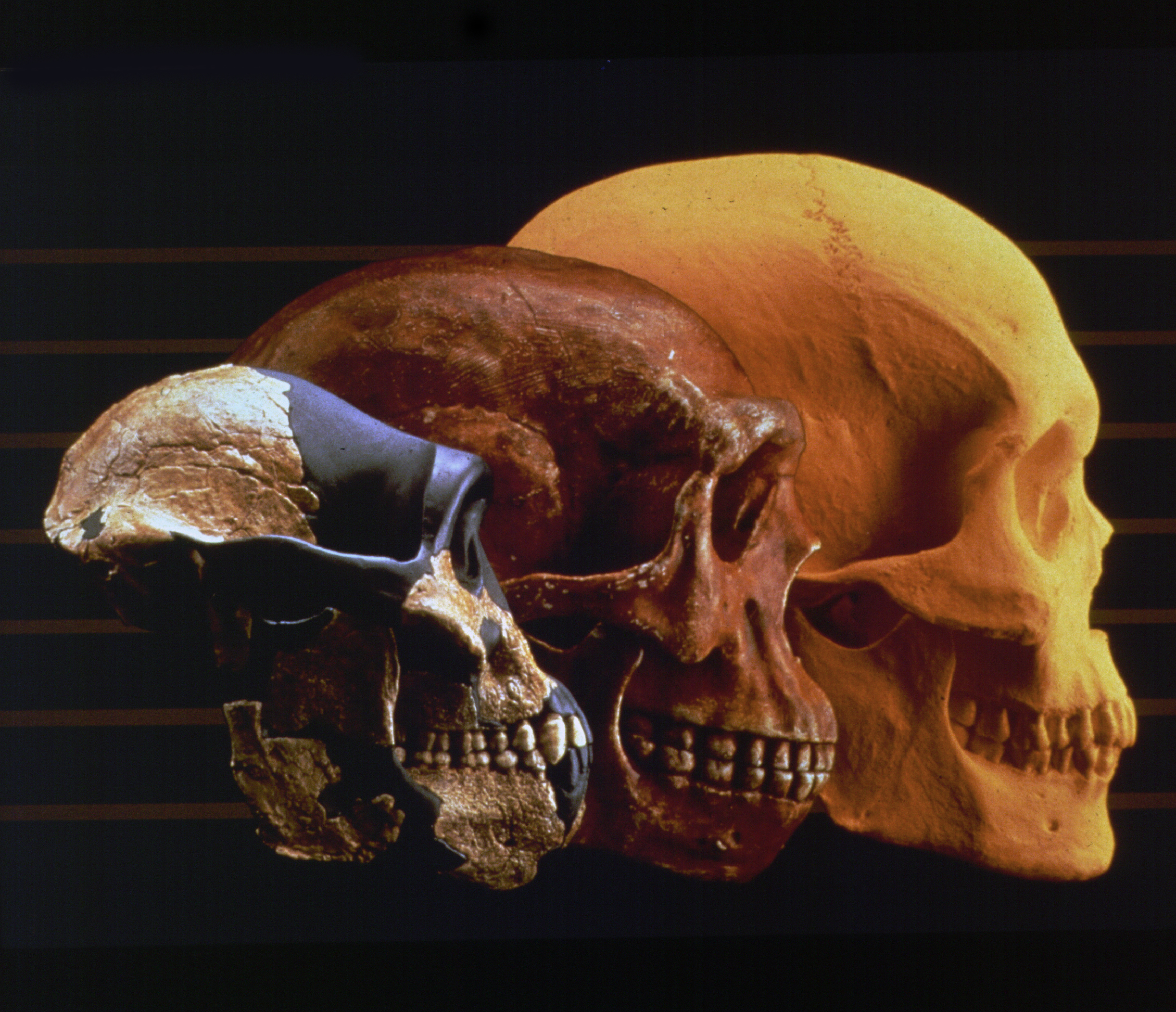
Why did the size of our brains change over time? Answer >>
Be Part of
Ask An Anthropologist
By volunteering, or simply sending us feedback on the site. Scientists, teachers, writers, illustrators, and translators are all important to the program. If you are interested in helping with the website we have a volunteers page to get the process started.


